Women's Rights Backlash Threatens Climate Progress, Experts Warn
A growing global backlash against women's rights is not only jeopardizing gender equality but also hindering progress in addressing the climate crisis, according to a new UN report and experts in the field.
Thirty years after the landmark Beijing Declaration and Platform for Action, intended to champion gender equality worldwide, the UN has released data revealing a concerning surge in threats to women and girls' rights. The UN Women's report, "Women's Rights in Review 30 Years After Beijing," indicates that nearly a quarter of governments worldwide reported a backlash against women's rights in 2024. This trend, observed in countries like Spain, Canada, the Philippines, Brazil, Lebanon, Australia, Mongolia, and Zimbabwe, is characterized by increased speed, scale, and intensity, particularly in patriarchal societies.
UN Secretary-General Antonio Guterres emphasized the severity of the situation, stating that "Globally, women's human rights are under attack. Instead of mainstreaming equal rights, we're seeing the mainstreaming of misogyny." Despite advancements, stark disparities persist, with only 87 countries ever led by a woman and a woman or girl being killed every 10 minutes by an intimate partner or family member. Underrepresentation in leadership roles remains a significant issue, with women holding only 10% of Fortune 500 CEO positions and approximately 24% of senior newsroom editorial roles.
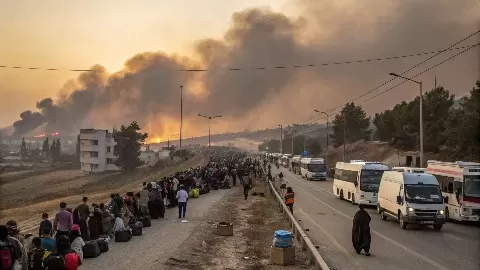
The connection between gender equality and climate action is increasingly evident. The UN estimates that women and girls account for four out of five people displaced by climate-related disasters and that, by 2050, an additional 158 million women and girls could be pushed into poverty due to climate change.
On the "Women in Climate" podcast, Kathy Baughman McLeod, CEO of Climate Resilience for All, highlighted that women face both gender bias and cultural stereotypes that exacerbate their vulnerability to climate impacts. For example, during heat waves in Pakistan, women are often restricted from sleeping in cooler, open areas due to cultural norms.
Recognizing this disparity, Climate Resilience for All launched an insurance program in India to support women who lose income during heat waves. Experts argue that greater female representation is crucial, considering their significant role in sectors like food production (where they produce up to 80% of food in developing countries) and their contributions through unpaid household and care work.
Jessica Robinson, partner at Solve Solutions, a UAE-based sustainability advisory firm, identified education and access as key challenges hindering women's greater involvement in climate action. A significant setback, however, is the shift in US policy regarding diversity and inclusion. US President Donald Trump recently declared an end to "Diversity, Equity and Inclusion policies," a move deemed "woeful" by Robinson.
Despite this challenge, Naomi Kerbel, host of "Women in Climate" and director of communications at SEC Newgate UK, sees an opportunity for resilient women leaders to navigate change and drive progress.
With the UN estimating that full gender equality is still 300 years away and critical climate deadlines looming in 2050, Kerbel underscores the urgency of empowering women to solve climate issues in tandem with advancing gender equality. "We've already surpassed one and a half degrees of [global] warming in 2024 so it's really imperative that we focus on that, and I think the women are the solution, because we can solve these issues in tandem," she concluded.