Antarctic Ice Sheet Gains Mass: A Temporary Reversal?
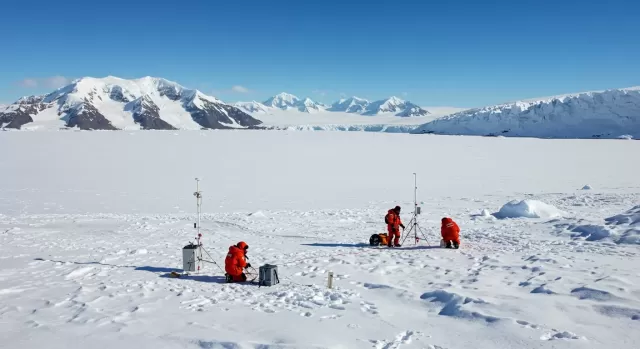
Recent scientific findings have revealed a surprising twist in the ongoing saga of the Antarctic ice sheet. Contrary to the prevailing trend of accelerating ice loss, the massive ice sheet experienced a period of mass gain between 2021 and 2023. This unexpected surge in ice accumulation challenges the narrative of a simple, linear decline and underscores the complex, fluctuating nature of climate change impacts.
A study published in Science China Earth Sciences documented this anomaly, highlighting a significant shift from the previous decade. During the 2010s, the Antarctic ice sheet shed an average of 142 billion tonnes of ice annually. However, the period from 2021 to 2023 saw an annual gain of approximately 108 billion tonnes. This research concentrated on four major glacier basins within Antarctica to determine the cause of this variation.
The study's authors attribute this ice gain primarily to increased snowfall, particularly across eastern Antarctica. Warmer atmospheric temperatures, a direct consequence of climate change, allow the air to hold more moisture, leading to more intense snowfall events. While this may seem counterintuitive, scientists have long predicted such extreme weather phenomena as part of a changing climate.
Despite this period of positive ice accumulation, it's crucial to maintain a long-term perspective. Antarctica has experienced a net loss of ice since the 1980s, and the recent gains would require roughly half a century of sustained snowfall at the levels seen between 2021-2023 just to return to previous ice mass levels. More recent data from NASA indicates that increased precipitation might have ended in 2025, returning to the pre-2020 levels.
This temporary reprieve should not be misinterpreted as evidence that climate change is reversing course. Instead, it serves as a crucial reminder of the complexities and variability inherent in climate systems. The researchers emphasize that the patterns of ice loss and gain in Antarctica provide vital signals about the state of our planet's climate. Understanding these patterns requires ongoing research and monitoring. The Antarctic ice sheet's future, and its impact on global sea levels, remains a critical area of scientific investigation.