Taiwan's Strange Parasitic Plant: Balanophora
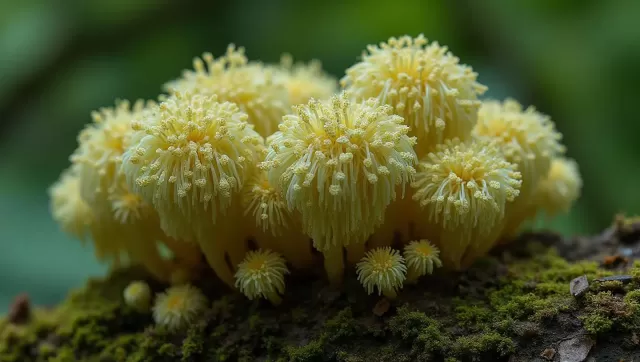
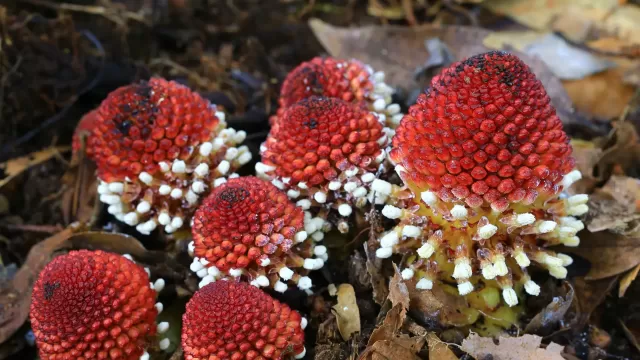
Deep in the subtropical undergrowth of Okinawa, Taiwan, and Japan, an organism thrives that challenges the biological definition of flora. To the casual observer walking through the damp shade of moss-laden forests, it appears to be a mushroom. However, this is Balanophora, a parasitic plant that produces some of the tiniest flowers and seeds in the natural world.
This organism has abandoned the defining trait of the plant kingdom: photosynthesis. Lacking chlorophyll and a traditional root system, it cannot convert sunlight into energy or draw water directly from the soil. Instead, it acts as a thief, attaching itself to the roots of specific host trees to siphon nutrients.
Genetic Adaptation and Plastid Reduction
Recent research conducted by a collaborative team from the Okinawa Institute of Science and Technology (OIST) and partner universities has mapped the evolutionary history of this unusual genus. The findings reveal that while Balanophora has stripped away many plant-like characteristics, it retains specific internal structures necessary for its parasitic lifestyle.
One of the most significant discoveries concerns plastids, the organelles responsible for photosynthesis in green plants. In most vegetation, plastids require approximately 200 genes to function. In Balanophora, this genetic code has been slashed to roughly 20 genes. Despite this extreme reduction, the cellular machinery remains active. The plant continues to transport hundreds of proteins into these shrunken plastids, utilizing them for essential biosynthesis tasks unrelated to photosynthesis. This evolutionary trajectory parallels that of non-plant parasites, such as the organism responsible for malaria, suggesting a common biological pathway for lifeforms that become fully dependent on hosts.
An Ancient Lineage
The Balanophoraceae family is not a recent evolutionary development. It is one of the oldest lineages of fully parasitic plants, with origins tracing back to the mid-Cretaceous period, approximately 100 million years ago. This extensive history has allowed the genus to develop highly specialized survival mechanisms, particularly regarding reproduction.
A Rare Reproductive Strategy
While many plants rely on pollinators and fertilization to create seeds, Balanophora displays a remarkable flexibility known as agamospermy—the ability to produce seeds asexually. This trait manifests in different ways across populations:
- Facultative Agamospermy: Some populations can reproduce either sexually or asexually depending on conditions.
- Obligate Agamospermy: Certain species have abandoned sexual reproduction entirely, producing clones without fertilization.
Researchers noted that the populations relying entirely on asexual reproduction were predominantly found on islands. This strategy carries risks, such as the accumulation of harmful mutations and a lack of genetic diversity. However, it provides a critical advantage for colonization. A single female plant, upon reaching a remote island, can establish an entire colony without the need for a male partner, allowing the species to spread rapidly in narrow, dark ecological niches where few other plants can compete.
Conservation Challenges
Despite the ability to clone itself, Balanophora remains ecologically fragile. The plant is highly selective, often parasitizing only a narrow range of tree species. This specialization makes it extremely sensitive to environmental shifts.
Habitat destruction, logging, and unauthorized collection pose severe threats to these populations. Because their survival is inextricably linked to the health of their host trees, the loss of the forest canopy often spells immediate extinction for the parasite. Conservationists emphasize that studying these ancient, rule-breaking plants is urgent, as they offer a unique window into how complex life evolves and adapts in the shadows of the forest.