Sea Level Rise: Urgent Need for Proactive Solutions
The pace of global sea level rise has entered uncharted territory, presenting a profound challenge to civilizations worldwide. With each incremental foot of ocean encroachment, an estimated 100 million individuals face displacement. Current trajectories suggest a staggering 300 million people may be compelled to migrate inland in coming decades, inevitably triggering complex social and political upheaval. Yet, in the shadow of this immense crisis, precise, localized forecasts remain elusive, and investment in strategies to potentially slow the melt is negligible.
While aggressively reducing greenhouse gas emissions remains non-negotiable, it is no longer sufficient. The global community must simultaneously pursue two critical paths: achieving precise predictions of ice sheet behavior and investigating scientifically-grounded methods to preserve them.
A New Perspective on Ice
A pioneering cohort of researchers is reframing the problem. They are moving beyond viewing polar ice as a remote, immutable monolith, instead treating it as a dynamic system that can be understood, modeled, and potentially safeguarded. The scale of this endeavor is monumental. The primary engines of sea-level rise are marine-terminating glaciers, eroded from below by warming ocean currents—a process that persists regardless of atmospheric emission cuts. These glaciers function like colossal ice cubes added to a global glass, capable of causing abrupt sea level surges.
The Imperative of Thwaites Glacier
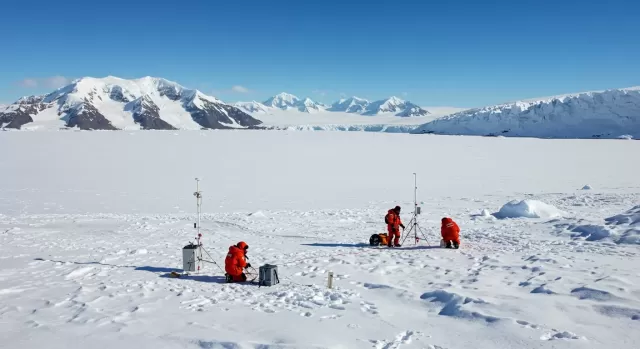
All eyes are on West Antarctica's Thwaites Glacier, an expanse comparable in size to Florida. Dubbed the "Doomsday Glacier," it acts as a keystone, buttressing the far larger West Antarctic Ice Sheet. Satellite data indicates Thwaites is destabilizing. Its potential collapse could pull the entire ice sheet with it, elevating global sea levels by over six feet within our children's lifetimes and displacing half a billion people. Crucially, even a return to pre-industrial carbon dioxide levels would not arrest this specific collapse driven by oceanic heat.
This outlook is formidable, but not a signal for surrender. We are uniquely positioned to confront this challenge, armed with decades of polar research and a suite of innovative technologies.
The Tools for a Solution
Modern science brings powerful assets to this fight:
- Satellite-based radar for continuous monitoring.
- Solar-powered drones and robotic submarines for hazardous exploration.
- Laboratory-created "artificial glaciers" to simulate processes.
- Advanced computational modeling and artificial intelligence to synthesize data and forecast futures.
Nature-Inspired Stabilization Strategies
What might proactive intervention look like? Glaciers are rivers of ice, flowing over bedrock and sediment. Under certain conditions, they can re-freeze to their beds, halting their march. This occurred naturally two centuries ago beneath the Kamb Ice Stream in Antarctica. The freezing at limited contact points was enough to virtually stop the glacier's flow, allowing it to regain mass.
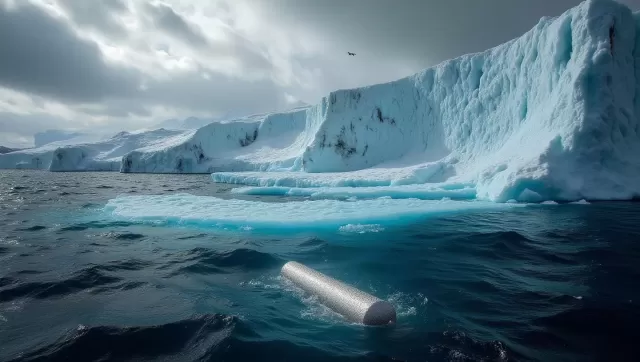
Critically, this natural stabilization has endured for centuries without destabilizing neighboring regions. It suggests that targeted, nature-inspired interventions could secure glaciers like Thwaites at a manageable cost and risk—especially when weighed against the catastrophic economic and human toll of unchecked sea-level rise. One promising concept involves drilling to the glacier's base to install passive cooling systems, such as thermosiphons, to reinforce its foundation.
The Path from Idea to Implementation
These concepts are presently in their infancy. Transforming them into viable solutions demands rigorous research and development, guided by established engineering frameworks like NASA's Technology Readiness Level process. This work must integrate diverse scientific perspectives, engage multiple governing bodies and stakeholders, and uphold the highest standards of environmental responsibility. The urgency imposed by rising seas demands innovation and speed, but not at the expense of meticulous science and ethical caution. We cannot adopt a "move fast and break things" mentality, yet neither can we debate until the floodwaters arrive.
Funding the Front Lines
Currently, philanthropic efforts are bridging a critical funding gap left by governments. The recent International Thwaites Glacier Collaboration, a major U.S.-U.K. partnership, invested an average of $7 million annually. While significant for glaciology, this sum is dwarfed by the hundreds of billions lost yearly to coastal flooding. Scaling preparedness requires sustained and substantially larger commitments.
For scientists long accustomed to documenting glacial decline, a pivotal shift is underway. The focus is turning toward proactive application of knowledge: radically improving sea-level forecasts to inform preparedness, while concurrently pioneering research into interventions that could moderate the rate of rise.
Confronting the certainty of continued sea-level rise is not synonymous with passive acceptance. The path forward is clear: we must intensify emission reductions while concurrently, and responsibly, exploring every potential avenue to slow the loss of ice and avert worst-case scenarios. If new solutions prove elusive, we will at least meet the future knowing every ethical option was pursued. And if we succeed, we will have achieved the once-unthinkable: preserving the world's coastlines and gifting future generations the promise of stable shores.