Fighting Locust Swarms Through Improved Soil Nutrition
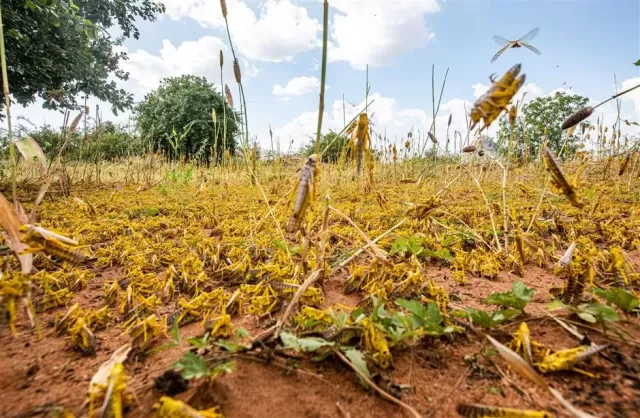
While locust swarms are often associated with historical catastrophes, they remain a devastating modern reality. These insects can obliterate agricultural production across entire regions, threatening food security and the economic stability of vulnerable communities. A single massive swarm can occupy an area equivalent to a major metropolitan center, such as Phoenix or New York City, leaving total crop failure in its wake.
At Arizona State University, the Global Locust Initiative is spearheading a different approach to this ancient problem. Led by Arianne Cease, researchers are looking beneath the surface—specifically at soil composition—to find ways to disrupt the biological triggers that lead to these destructive outbreaks.
Transforming Pest Control through Soil Nutrition
The research team recently completed a groundbreaking study in Senegal, marking the first time a soil-based locust management strategy has been successfully moved from a laboratory setting into active farming environments. By focusing on the nutritional balance of crops, scientists discovered they could naturally discourage locusts from feeding.
The strategy hinges on the relationship between soil nitrogen and insect physiology. Through extensive field testing, the team demonstrated that improving soil quality does more than just help plants grow; it creates a chemical defense mechanism that makes the crops far less appealing to migratory pests.
The "Donut Diet" and Insect Migration
The biological mechanism behind this breakthrough is rooted in how locusts process energy. After 15 years of investigation, Cease identified a consistent trend: plants grown in nutrient-depleted soil are typically high in carbohydrates but lacking in protein.
This high-carb profile functions as a "donut diet" for locusts. Much like human athletes who load up on sugars for endurance, locusts utilize these carbohydrate-heavy plants to fuel their long-distance flights and swarming behaviors. Conversely, when plants are grown in nitrogen-rich soil, they produce more protein. Locusts find it difficult to process this excess protein, which hinders their growth and reduces their motivation to swarm.
Evidence from the Field
To test this theory in a real-world setting, the research team collaborated with 100 farmers in Senegal who frequently battle the Senegalese grasshopper. The experiment involved a simple but controlled comparison:
- Each participating farmer maintained two separate plots of millet.
- One plot received nitrogen-based fertilizer treatments.
- The second plot was left untreated to serve as a baseline.
The data collected throughout the growing season was conclusive. The fertilized plots experienced significantly lower levels of insect infestation and leaf damage. Most importantly, the harvest yields from the nutrient-enriched plots were double those of the untreated fields. Additionally, the researchers confirmed that the increase in nitrogen did not attract other types of pests, clearing a major hurdle for widespread adoption.
Scaling Sustainable Solutions
While the initial study utilized nitrogen fertilizer, the long-term goal is to provide farmers with affordable, self-sustaining methods. In many regions, commercial fertilizers are economically out of reach. As a result, the project has transitioned its focus toward composting.
By teaching local communities how to turn crop residues into nutrient-rich compost rather than burning them, the initiative is helping farmers improve their soil health independently. Many Senegalese farmers have already integrated these composting techniques into their permanent routines, noting that the practice provides a practical, low-cost barrier against grasshopper infestations.
Preparing for Future Threats in North America
While the United States does not currently deal with active locust swarms, the research has significant domestic implications. Changing environmental patterns suggest that the Central American locust is moving northward, with experts predicting that regions like Texas could become hospitable environments for the species within the next decade.
Furthermore, the Western United States already struggles with a group of native insects known as the "Dirty Dozen." These rangeland grasshoppers cause millions of dollars in damage annually by competing with livestock for forage. The Global Locust Initiative aims to apply the lessons learned in Senegal to help American ranchers and farmers manage these native pests using ecological interventions rather than relying solely on chemical pesticides.