Fed Rate Cut Sparks Rare Three-Way Dissent
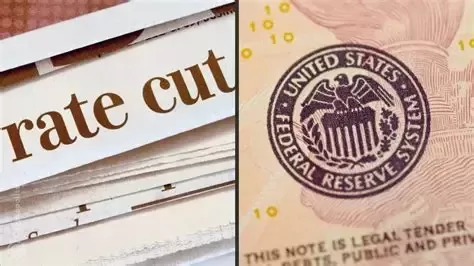
The Federal Reserve's decision on Wednesday to lower the federal funds rate by a quarter percentage point was notably contentious, revealing significant internal divisions not seen in over six years. Three official dissents emerged from the voting members of the Federal Open Market Committee (FOMC), marking the most split vote since September 2019.
The dissenting votes came from both directions, underscoring the policy dilemma facing the central bank. Chicago Fed President Austan Goolsbee joined Kansas City Fed President Jeffrey Schmid in advocating for no rate cut at all, preferring to hold steady. On the other side, Federal Reserve Governor Stephen Miran argued for a more aggressive half-point reduction. This meeting marked Miran's third consecutive dissent, having similarly called for larger cuts in both September and October. Schmid, too, had dissented in October, favoring no change.
Beyond these formal "hard dissents," the meeting revealed further disagreement through four "soft dissents" from nonvoting participants. These policymakers submitted economic projections, visualized in the "dot plot," indicating they believed the benchmark interest rate should have ended the year at its previous range of 3.75% to 4%, rather than the lowered rate. This collective pushback highlights a persistent hawkish bloc within the Fed that remains wary of easing policy too quickly.
Analysts interpreted these divisions as a key influence on the Fed's official statement. Kay Haigh, global co-head of fixed income and liquidity solutions at Goldman Sachs Asset Management, noted that the "hard dissents" and "soft dissents" underscore the hawkish faction's influence. She suggested the Fed's reintroduction of language concerning the "extent and timing" of future policy decisions was likely an effort to appease these members. "While this leaves the door open to future cuts," Haigh added, "labor market weakness will have to clear a high bar," indicating that further easing will be contingent on compelling economic data.
However, some economists caution against viewing the current dissents as a reliable predictor of the Fed's 2025 trajectory. Christopher Rupkey, chief economist at FWDBONDS, argued that while the dissenters successfully opposed a faster pace of cuts now, the landscape is shifting. "The dissents ruled against a faster pace of rate cuts today, but the winds of change are in the air," he said. Rupkey pointed to the potential for significant leadership changes, including a new Fed Chair in 2026 and possibly many new officials, which could alter the committee's dynamics. He further suggested that more rate cuts are likely next year, aligning with a potential "Trump 2.0" economic agenda that, while not explicit, would prioritize reductions to counteract economic slowing fueled by import tariff uncertainties.
In summary, the Fed's latest meeting laid bare a deep internal debate between members cautious about inflation and those more concerned with supporting the economy. The triple dissent signals a lack of consensus at a critical juncture, forcing a carefully worded policy path that keeps options open. Yet, as external political and economic pressures evolve, today's dissent may give way to a different consensus tomorrow, with the central bank's future direction hinging on both incoming data and the changing composition of its leadership.